
Buy One Get One (BOGO) promotions are a cornerstone of retail marketing. From groceries to fashion, these deals are ubiquitous. But have you ever wondered why ‘buy one get one’ deals work so consistently? It’s more than just a simple discount. BOGO campaigns tap into deep psychological triggers and offer clear strategic advantages for businesses. Understanding these mechanisms is key to both consumer behavior and effective marketing. This article explores the compelling reasons behind the success of BOGO offers, dissecting the psychology, business benefits, and best practices.
The Core Psychology: Why Buy One Get One Works on Consumers
The allure of a BOGO deal is powerful, often making consumers feel they’ve secured an exceptional bargain. This perception drives purchasing decisions. It effectively answers the question, why buy one get one works so well from a psychological standpoint.
The Illusion of a “Free” Item (Perceived Value)
Consumers perceive the second item in a BOGO offer as “free,” even if they are effectively paying half price for each. This word choice – “free” – holds immense psychological power. It implies zero cost for additional value, which is highly attractive. Zero-price Effect said that people prefer getting something free over a discounted price, even if the monetary value is the same. This perceived “freebie” significantly boosts the attractiveness of the deal.
Urgency and Scarcity
Many BOGO deals are time-limited or quantity-limited. This creates a sense of urgency. Consumers feel they must act quickly to avoid missing out on the perceived great value. This scarcity principle is a potent motivator. It pushes indecisive buyers to make a purchase, driving immediate sales volume. The thought of losing a good deal can be more powerful than the thought of gaining an equivalent one.
Stockpiling Behavior
For non-perishable goods or items used regularly, BOGO encourages stockpiling. If customers know they will use the product anyway, buying two for the price of one (or slightly more) seems like a smart, economical choice. This behavior is particularly evident with household essentials or personal care products. Consumers rationalize the purchase as a way to save money in the long run. This ensures future purchases are made now.
Reduced Decision Fatigue
When faced with many choices, consumers can experience decision fatigue. A BOGO offer simplifies the decision-making process. The value proposition is clear and immediate. It removes the need for complex price comparisons, making the purchase feel straightforward and beneficial. The mental effort required to justify the purchase is significantly lowered. This smooths the path to conversion.
The Fear of Missing Out (FOMO)
Social influence plays a role. When consumers see others taking advantage of a BOGO deal, or perceive it as a widely popular offer, they may experience FOMO. This fear of being left out of a good deal can motivate them to participate. It creates a bandwagon effect, where the perceived popularity of the offer reinforces its value. This highlights why buy one get one works as a social phenomenon.
Strategic Benefits for Businesses: Driving Sales Growth with BOGO
Beyond psychological triggers, BOGO promotions offer tangible benefits for businesses, impacting inventory, customer acquisition, and overall revenue. Businesses strategically deploy BOGO to achieve specific objectives.
Driving Sales Volume and Inventory Clearance
One of the most direct benefits of BOGO is its ability to rapidly increase sales volume. This is especially useful for clearing excess inventory, seasonal items, or products nearing their expiry date. Instead of marking down items significantly, which can devalue the brand, BOGO allows businesses to move products efficiently. This frees up warehouse space and working capital. For example, a clothing retailer might use BOGO to clear out last season’s stock before new collections arrive.
Attracting New Customers
BOGO deals can act as powerful customer acquisition tools. The high perceived value lowers the barrier to entry for new customers who might be hesitant to try a product at full price. Once they experience the product, they are more likely to become repeat buyers. Many brands leverage BOGO as an introductory offer to expand their customer base. It’s a compelling incentive for first-time buyers.
Boosting Average Order Value (AOV)
While the per-unit profit margin might be lower, BOGO often increases the total transaction value. Customers are encouraged to buy more than they initially intended, leading to a higher AOV. This is crucial for improving overall profitability, as the cost of processing one larger transaction is often less than processing two smaller ones. Many retailers track AOV closely to gauge campaign success.
Enhancing Brand Loyalty
When customers feel they are getting great value, it fosters positive associations with the brand. Successfully executed BOGO campaigns can enhance customer satisfaction and encourage repeat purchases, contributing to long-term loyalty. Brands like Starbucks often use BOGO on specific days to reward loyal customers and drive traffic. This reinforces a positive brand image.
Competitive Advantage
In crowded markets, BOGO offers can differentiate a business from competitors. When rivals are offering simple percentage discounts, a BOGO deal can stand out as a more appealing proposition. It provides a distinct marketing angle that captures attention. This can be particularly effective during peak shopping seasons. It makes a brand’s offer seem uniquely generous.
Implementing Effective BOGO Campaigns: Making Buy One Get One Work
For BOGO to be truly effective, careful planning and execution are essential. A poorly planned campaign can erode margins without delivering desired results.
Target Audience and Product Selection
Not all products are suitable for BOGO. High-margin, high-volume, or complementary products often work best. Analyze your customer data to understand purchasing habits and identify products that would naturally lead to a second purchase. Avoid BOGO for premium, exclusive items where scarcity is part of their appeal. A shampoo and conditioner BOGO makes more sense than a luxury watch BOGO. Consider what your audience values.
Clear Communication and Promotion
The success of a BOGO campaign hinges on clear, concise communication. Customers must immediately understand the offer and its terms. Use prominent signage, clear website banners, and unambiguous language in all marketing materials. Promote the offer across multiple channels – email, social media, in-store displays – to maximize reach. An unclear offer can lead to frustration and missed opportunities.
Setting Campaign Duration
Strategic timing is vital. BOGO campaigns should have a defined start and end date to create urgency and prevent customers from waiting indefinitely. Short, impactful campaigns (e.g., a weekend sale) often perform better than extended ones. This reinforces the scarcity principle discussed earlier. Too long, and the urgency dissipates. Too short, and not enough people may learn about it.
Monitoring and Analysis
Continuously track the performance of your BOGO campaigns. Monitor key metrics such as sales volume, average order value, customer acquisition rates, and profit margins. Use this data to refine future promotions. A/B test different BOGO variations (e.g., Buy One Get One 50% Off vs. Buy One Get One Free) to determine what resonates best with your audience. Data-driven insights are crucial for optimizing future efforts.
Potential Pitfalls and How to Avoid Them
While BOGO offers are powerful, they come with potential downsides if not managed carefully. Being aware of these challenges is part of understanding why buy one get one works or fails.
Margin Erosion
The most significant risk is cannibalizing profits. If the BOGO offer is applied to already low-margin products, or if the discount is too deep, it can significantly impact profitability. Always calculate the true cost of the promotion, including the value of the “free” item. Ensure the increased sales volume compensates for the reduced per-unit margin. Strategic pricing is key to avoiding this pitfall.
Training Customers for Discounts
Over-reliance on BOGO can train customers to only purchase when a deal is available. This can reduce full-price sales and make it harder to sell products without a promotion. Use BOGO strategically and sparingly, not as a constant state. Vary your promotional offers to avoid this expectation. It’s important to maintain perceived full value.
Logistical Challenges
Handling increased inventory movement, managing stock levels for two items instead of one, and ensuring smooth checkout processes can pose logistical challenges. Ensure your supply chain and operational teams are prepared for the surge in demand. This is particularly true for physical retail where shelf space and stock management become critical. Efficient operations underpin successful campaigns.
Real-World Examples: How Buy One Get One Works in Practice
BOGO’s effectiveness is demonstrated by many successful brands across various sectors. These examples highlight the versatility of BOGO promotions when they are implemented thoughtfully.
Example 1: Retail (Apparel & Cosmetics)
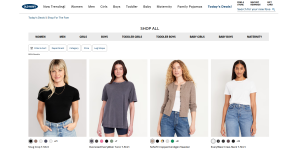
Old Navy frequently runs sales offering up to 50% off across their product categories, including promotions resembling Buy One Get One 50% Off on various apparel items like jeans, t-shirts, and shorts. These sales are particularly prominent during events like Giftober, Black Friday, and Back-to-School seasons, helping them clear seasonal inventory and boost sales. These promotions are well documented in various news and lifestyle articles and official Old Navy communications.
Example 2: Food & Beverage (Fast Food & Groceries)
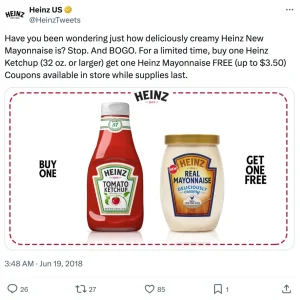
Kraft Heinz is a well-known brand that frequently runs Buy One Get One Free (BOGO) offers on popular food products like ketchup and other packaged goods. These promotions are widely reported in sales and marketing analyses, emphasizing their effectiveness in boosting volume and increasing customer loyalty through perceived savings on daily essentials.
Conclusion: Harnessing the Power of BOGO
The enduring success of Buy One Get One promotions is no accident. They are a sophisticated blend of psychological persuasion and shrewd business strategy. Understanding why buy one get one works involves recognizing the consumer’s desire for perceived value, the power of urgency, and the practical benefits of increased sales volume and customer engagement for businesses. When executed thoughtfully, with clear objectives and careful monitoring, BOGO remains an incredibly effective tool in the marketer’s arsenal. By leveraging these powerful deals, businesses can drive significant growth, enhance customer loyalty, and stand out in a competitive marketplace. Embrace the strategic potential of BOGO to unlock new levels of success.
Frequently Asked Questions (FAQ) About BOGO
Understanding common queries helps clarify why buy one get one works and its practical application.
- What is BOGO?
- BOGO stands for “Buy One Get One.” It’s a promotional strategy where customers receive a second item (usually of equal or lesser value) for free or at a reduced price when they purchase one item.
- Is BOGO profitable for businesses?
- Yes, BOGO can be highly profitable when implemented strategically. While it reduces the per-unit margin, it often drives significant increases in sales volume, average order value, and customer acquisition, which can lead to greater overall revenue and profit. Careful calculation of costs and expected uplift is crucial.
- When should I use BOGO promotions?
- BOGO is effective for clearing inventory, launching new products, attracting new customers, increasing sales during slow periods, or competing in crowded markets. It’s particularly useful for products with healthy margins or those consumers are likely to buy in multiples.
- Does BOGO work for all products?
- No, BOGO isn’t suitable for every product. It generally works best for high-volume, lower-cost items, or products that complement each other. Luxury items, highly specialized goods, or unique, one-off purchases are less likely to benefit from a BOGO strategy.