
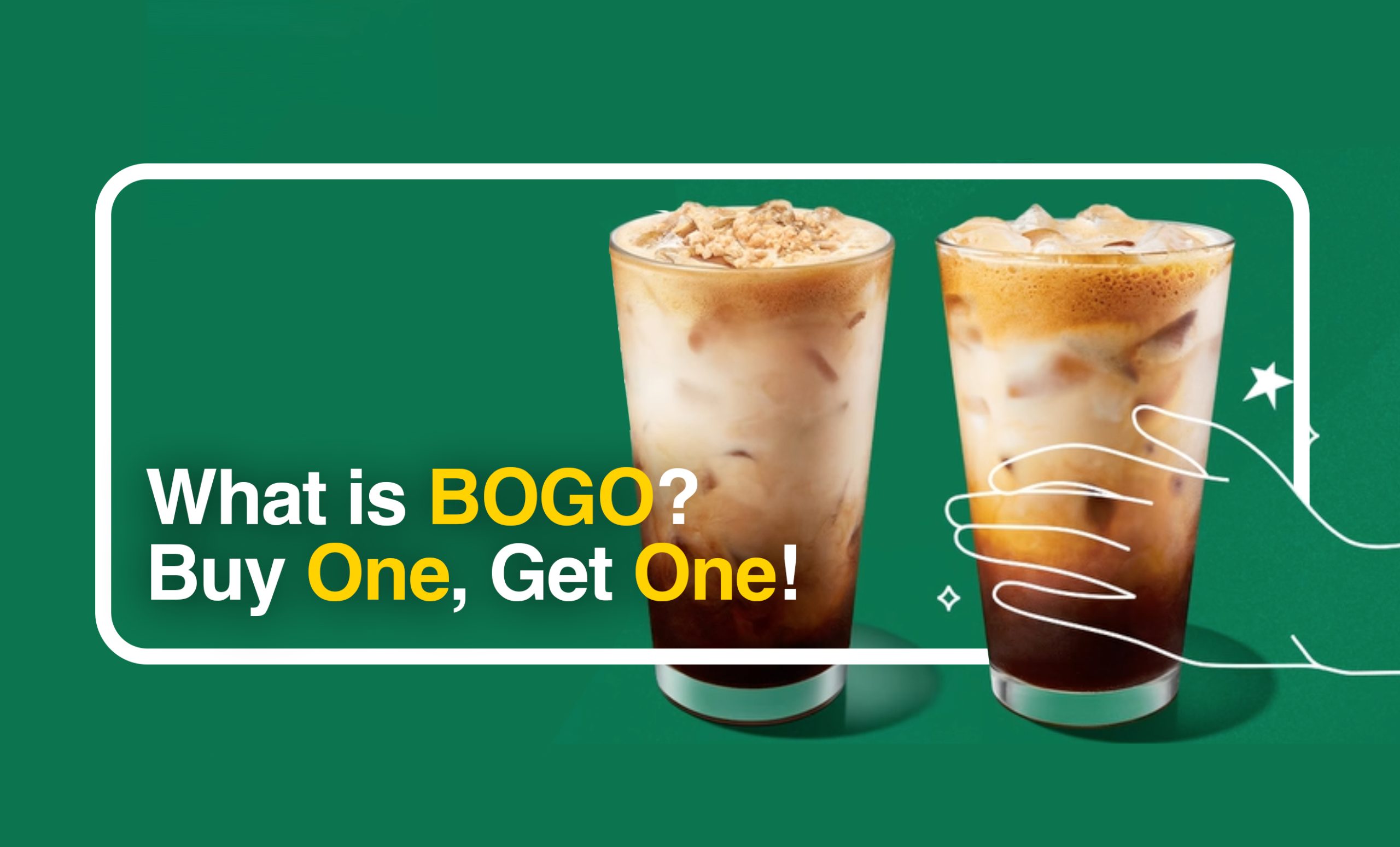
A BOGO deal is more than a discount; it’s a powerful psychological trigger. By understanding principles like perceived value, urgency, and reciprocity, merchants can craft offers that significantly boost sales and average order value. Let’s discover the science behind why BOGO works and how you can apply it to your Shopify store today.
A potential customer lands on your Shopify store. They add a single product to their cart and head to checkout. The sale is good, but not great. You’ve spent marketing dollars to acquire this customer, and the Average Order Value (AOV) barely covers the cost. This is a common pain point for D2C brands: steady traffic that fails to translate into profitable growth.
Many merchants turn to sitewide percentage discounts, only to find they erode margins without creating real excitement. The solution isn’t just a better discount; it’s a better understanding of shopper psychology. The “Buy One, Get One Free” (BOGO) promotion is a powerful tool because it taps into deep-seated cognitive biases. Understanding why buy one get one works is the key to transforming it from a simple price cut into a strategic lever for increasing AOV and clearing inventory.
This guide will explore the psychological principles that explain how to implement buy one get one strategy effectively. We will also provide a step-by-step framework for launching your own high-converting BOGO campaign.
The Power of “Free”: Unpacking Perceived Value and Loss Aversion
At its core, the phenomenal success of BOGO is powered by a single, irresistible word: “Free.” Human brains are hardwired to overvalue items that cost nothing. This powerful reaction is a key factor in why buy one get one works so consistently.
Behavioral economist Dan Ariely calls this the “Zero Price Effect” in his book Predictably Irrational. His experiments demonstrated that the psychological gap between a very low price (like $0.01) and zero is immense. We perceive a free item as having no downside. There’s no risk of it being a bad purchase, which makes the offer incredibly compelling.
When a shopper sees a “50% Off” sign, their brain calculates the savings. When they see “Buy One, Get One Free,” their brain fixates on the gain—the free product. This simple reframing shifts the focus from saving money to acquiring something extra. This feeling of acquisition feels far more valuable, which is another reason why you should use buy one get one strategies.
This effect is amplified by another cognitive bias: loss aversion. First described by psychologists Daniel Kahneman and Amos Tversky, loss aversion theory states that the pain of losing is psychologically about twice as powerful as the pleasure of gaining. A time-limited BOGO offer frames the decision not as “Do I want to buy this?” but as “Am I willing to lose the free item?” By not taking the deal, the shopper feels they are actively losing an opportunity. This is a feeling they are highly motivated to avoid and a critical component of why buy one get one works.
For example, Sephora frequently uses personalized BOGO promotions for its Beauty Insider members. While a standard discount like “20% off selected products” is effective, a clear and simple “Buy One, Get One Free” offer on popular skincare or makeup items creates a much bigger sales surge. Shoppers often buy multiple items—sometimes even four or six—to take full advantage of the free products. Presenting these offers clearly on product and cart pages is crucial, as learning how to optimize your Shopify store for maximum conversions can be the difference between a customer seeing the value or abandoning their cart.
Creating Urgency and Scarcity: The Fear of Missing Out (FOMO)
If the word “free” gets the shopper’s attention, the Fear of Missing Out (FOMO) pushes them to complete the purchase. This urgency is fundamental to understanding how to use buy one buy-one-get-one campaign to drive immediate sales. BOGO offers are the perfect vehicle for creating urgency and scarcity, two potent drivers of eCommerce conversions.
Without a compelling reason to buy now, shoppers procrastinate or forget. A BOGO deal instantly introduces scarcity because the offer isn’t permanent; it’s a special event. You can amplify this effect with simple, proven tactics:
- Time-Limited Offers: Frame your BOGO sale as a “48-Hour Flash Sale” or “Weekend Special.” Adding a countdown timer to your product and cart pages visually reinforces this urgency. It shows the opportunity literally slipping away.
- Stock-Limited Language: Phrases like “While supplies last” or “Limited to the first 200 customers” trigger a competitive instinct. This implies high demand, increasing perceived value and making the BOGO deal seem exclusive.
- Seasonal Exclusivity: Tying BOGO offers to holidays or seasonal events creates a natural and believable deadline.
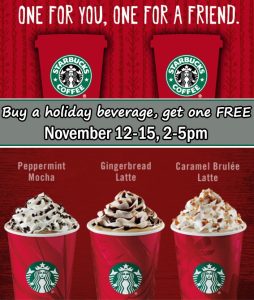
During holiday seasons, Starbucks often promotes “buy one holiday drink, get the second free” deals on popular festive beverages like Peppermint Mocha, Caramel Brulee Latte, and Gingerbread Latte. They build anticipation leading up to the event, and once live, the combination of the limited-time discount and the popularity of these drinks creates a sales frenzy. This sense of urgency and scarcity, especially during high-traffic holiday periods, helps drive immediate sales and boost customer engagement.
This urgency is a key pillar in many successful growth campaigns. It’s one of the proven strategies that top brands rely on to increase Average Order Value. By making the BOGO offer feel fleeting, you short-circuit the customer’s decision-making process, which is why these offers can boost revenue so quickly.
The Principle of Reciprocity: Building Goodwill to Drive Repeat Purchases
A successful BOGO campaign does more than just increase AOV for a single transaction. It can plant the seeds for long-term customer loyalty, which is a powerful, long-term benefit that shows why buy one get one is effective as a relationship-building tool. This is achieved through the psychological principle of reciprocity.
First detailed by psychologist Robert Cialdini in his book Influence, the rule of reciprocity states that people feel obligated to give back to others who have given to them first. A “free” item in a BOGO transaction is not just a product; it’s a perceived gift.
When a customer receives this gift, it triggers a subconscious desire to reciprocate. This feeling of goodwill is central to why buy one get one works for customer retention. In the short term, they might add another item to meet a BOGO threshold. In the long term, it creates a positive emotional connection to your brand. They feel they got exceptional value, making them more likely to:
- Shop with you again: The positive experience makes them choose your brand over a competitor.
- Leave a positive review: They feel motivated to share their good experience.
- Become a brand advocate: They’ll tell friends and family about the great deal they got.
This turns a transactional discount into a relationship builder. Setting up these ‘gift’ offers can be complex. To simplify, merchants can use an app like BOGO+ to automatically add the free item to the cart. This creates a seamless experience, reinforcing the feeling of receiving a gift without any hassle. This frictionless process can further help your stores increase sales by solidifying the feeling that your brand provides genuine value.
Strategic BOGO: How to Structure Offers
Understanding the psychology is only half the battle. Executing a BOGO profitably requires a strategic approach tailored to your specific goals. A poorly planned BOGO can hurt your brand or kill your margins. Here’s how to structure your offers.
1. Goal: Clear Excess Inventory
BOGO is one of the most effective ways to move slow-selling products without deep, margin-crushing clearance sales. This is often the most profitable way to help your store.
- How to structure it: “Buy one of our best-sellers, get a product from our clearance section for free.”
- Why it works: You attach the less-desirable item to a product customers already want. This moves old stock while preserving the perceived value of your core product line. For instance, a snack food company might offer a free bag of a soon-to-be-discontinued flavor with the purchase of a popular variety pack.
2. Goal: Introduce a New Product
Launching a new item is risky. A BOGO offer can significantly de-risk the trial process for customers and encourage quick adoption.
- How to structure it: “Buy product X, get our new product Y for free.”
- Why it works: It leverages the popularity of an existing product to drive trial for the new one. Customers hesitant to pay for an unknown item are happy to try it for free. This strategy shows why buy one get one works to expand your product reach.
3. Goal: Increase Average Order Value
The most common goal of a BOGO (Buy One, Get One) promotion is to encourage customers to buy more than they initially intended. Boosting the Average Order Value (AOV) is the most celebrated outcome of this strategy.
- How to structure it: “Buy one, get one 50% off” (BOGO50) or “Buy two, get one free.”
- Why it works: BOGO50 is ideal for higher-priced items where giving one away is unprofitable. “Buy two, get one free” pushes the cart value even higher than a standard BOGO.
Before launching any BOGO campaign, always calculate your Cost of Goods Sold (COGS) and profit margins. Ensure the offer helps you achieve your primary goal without sacrificing your financial health.
Conclusion
The “Buy One, Get One” offer is far more than a simple discount. It is a sophisticated marketing strategy rooted in decades of psychological research. By tapping into powerful cognitive biases like the Zero Price Effect, loss aversion, and FOMO, you can create promotions that don’t just move products—they motivate customers to act decisively.
A fundamental reason BOGO works is that it shifts the customer’s mindset from “How much can I save?” to “What can I gain?”. It reframes the purchase as an opportunity to acquire something valuable for free, creating an urgency that traditional percentage-off sales often lack. A complete understanding of this dynamic is no longer a “nice-to-have”; it’s a critical component of a modern growth strategy.
Stop just offering discounts. Start leveraging purchase psychology. Analyze your product margins, identify your goals, and launch a strategic BOGO offer this week. You will see for yourself why buy one get one works so well to lift your AOV.
Frequently Asked Questions (FAQ)
1. Is a BOGO offer profitable for small businesses?
Yes, if planned strategically. The reason why even small businesses should use BOGO promotions is because its profitability depends on your product margins and campaign goal. For clearing slow-moving inventory, a BOGO offer can be more profitable than letting stock expire or selling it at a 70-80% loss. For customer acquisition, the cost of the “free” item can be budgeted as a marketing expense, often yielding a better ROI than paid ads.
2. What’s the difference between BOGO and a 50% off discount?
Psychologically, they are vastly different, and this difference is key to why buy one get one works. A “50% off” deal focuses on saving money. A “Buy One, Get One Free” offer frames it as gaining a whole product for free. The perceived value of a free item is often much higher than saving 50%, even if the net cost is identical. BOGO also guarantees you move at least two units per transaction.
3. How do I choose which products to use for a BOGO campaign?
This depends on your goal and is crucial for successfully implementing the BOGO campaign for your store. To increase AOV, offer BOGO on your mid-range bestsellers. To introduce a new product, pair it as the “get one” item with a top-seller. To clear inventory, make the slow-moving items the “get one” free products. A great strategy is to use products with a high perceived value but a relatively low cost to you, like accessories with high margins.