
BOGO is more than just a discount—it’s a strategic tool for growth. When used correctly, Buy One, Get One offers can significantly increase your Average Order Value (AOV) by encouraging smart cross-sells and upsells. Let’s discover how to transform this classic promotion into a revenue-generating machine for your Shopify store.
For years, Shopify merchants have viewed the “Buy One, Get One” (BOGO) promotion as a simple tool for one job: clearing out old inventory. But what if this classic discount model could do more? What if it could be your single most effective strategy for increasing average order value, moving high-margin products, and improving customer loyalty?
The truth is, it can. Most merchants are leaving money on the table by running basic BOGO free campaigns that fail to guide customer behavior. A smarter Shopify discount strategy is needed.
The problem isn’t the BOGO offer itself; it’s the lack of strategy behind it. A simple “Buy a T-Shirt, Get One Free” offer rarely increases the total value of the cart. Instead of just giving products away, savvy D2C brands are now using BOGO for cross-sells and upsells, transforming a potential margin-killer into a powerful profit-driver. This guide provides a step-by-step framework to move beyond basic discounts and build sophisticated BOGO campaigns that fuel sustainable growth.
Why Standard BOGO Offers Hurt Profit Margins
For many growing D2C brands, the primary goal of a promotion is to increase sales volume. A traditional BOGO offer – buy one product, get the same one free – certainly achieves this.
However, it often comes at a steep cost: margin erosion. When you give away an identical item, you’re not increasing the cart’s value or introducing customers to new products. You’re simply fulfilling a pre-existing demand at half the price. This approach misses a critical opportunity to use the discount as a lever for strategic growth.
The core issue is that a standard BOGO offer doesn’t incentivize customers to explore your product catalog. They add the item they already wanted to their cart and receive a duplicate for free. This does little to boost your Average Order Value (AOV), a key metric for ecommerce success.
Furthermore, these simple offers can devalue your brand over time. If customers become accustomed to receiving products for free, they may be less willing to pay full price in the future. The goal is to create value, not just offer a discount.
A strategic BOGO should feel like a curated deal that benefits the customer. It must also achieve a specific business objective, like introducing a new product line, clearing complementary inventory, or increasing cart value. By shifting the focus from a simple giveaway to a guided shopping experience, you can protect your margins and build a more sustainable promotional strategy.
The BOGO Framework for Strategic Cross-Selling
The real power of BOGO is unlocked when you pivot from “Buy X, Get X” to “Buy X, Get Y.” This subtle shift transforms the promotion from a simple discount into a strategic cross-selling engine. Cross-selling is the practice of encouraging customers to purchase related or complementary items. A well-designed BOGO offer makes this process feel natural and valuable to the shopper.
The framework is simple: the “Buy X” item is a popular, high-traffic product. The “Get Y” item is a related product you want to introduce to the customer. This method is one of the most effective Shopify cross-sell promotions a brand can run.
- Consider a Shopify store specializing in beauty and cosmetics. A traditional BOGO might be “Buy one lipstick, get another lipstick free.” A strategic cross-sell BOGO would be “Buy any foundation, get a makeup blending sponge for 50% off.”
This approach is far more effective. First, it introduces a customer committed to buying a foundation to a highly relevant accessory they might not have considered. Second, it increases the total cart value, directly boosting AOV. The customer came for one item but is now leaving with two.
Here are a few examples across different industries:
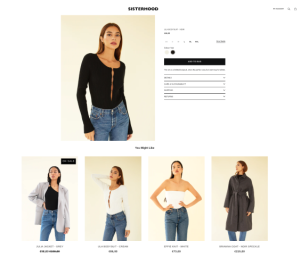
- Fashion & Apparel: Sisterhood, a sustainable women’s clothing brand, successfully incorporates cross-selling at the pre-checkout stage by suggesting complementary products related to the item a customer is viewing. For example, if a shopper selects a dress, Sisterhood will suggest matching accessories or related style items as “You might like” recommendations. This strategy helps increase the average order value while creating a seamless shopping experience without friction. Sisterhood’s intelligent cross-selling improves both customer satisfaction and sales.
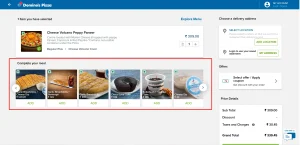
- Food & Beverage: Domino’s applies a strategic “Buy X, Get Y” promotional model where customers buying a large pizza are offered related items like chicken wings, desserts, or drinks at discounted prices or as part of a BOGO deal. This cross-selling encourages customers to add more to their cart, increasing the average order value while providing a natural, relevant upsell. The approach is effective at driving measurable sales growth during promotions.
The key is to map your products. Identify your best-sellers (the “X” items) and pair them with relevant, higher-margin, or new products (the “Y” items). This turns every BOGO offer into a curated product discovery experience.
Leveling Up: Advanced BOGO Models for High-Value Upsells
Once you’ve mastered the BOGO cross-sell, the next step is to use similar mechanics for upselling. An upsell encourages a customer to purchase a more expensive item or to add more products to their cart to receive a greater reward.
This is where tiered and conditional BOGO offers become incredibly powerful. Instead of a simple “Buy X, Get Y” structure, you create rules that incentivize customers to spend more to unlock a better deal. This gamifies the shopping experience and makes the upsell feel like a reward, not a sales tactic.
- For example, a standard offer might be “Buy 2 t-shirts, get 1 free.” A tiered upsell BOGO would be more sophisticated: “Buy 2 t-shirts, get 1 free, OR buy 4 t-shirts and get 2 free!” This encourages the customer to increase their order quantity to maximize the value of the deal.
Another powerful upsell technique is the “Spend X, Get Y” model. For instance, “Spend $100 on our skincare line, and get a free full-size bottle of our best-selling serum (a $40 value).” This sets a clear spending goal for the customer and uses a high-value free gift as the incentive to reach it, which is an excellent way to increase AOV with discounts.
These advanced strategies often require more flexibility than native Shopify discounts can offer. It can be challenging to set up rules based on cart value or item count. This is where merchants often explore the market for the best Shopify upsell apps that can handle complex, conditional logic without custom code.
A powerful app allows you to create tiered offers, bundle products, and display promotions clearly in the cart, which is crucial for conversion. For instance, you could run a campaign like “Buy a winter coat, get 25% off any boots, AND a free pair of gloves.” A setup like this, which combines multiple conditions, is nearly impossible with standard features but highly effective at boosting AOV.
Here’s a hypothetical example for a health and fitness brand:
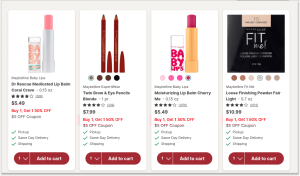
- Maybelline offers tiered BOGO deals such as “Buy one foundation, get one lipstick 50% off, plus a free makeup bag on orders over $75.” This combines product-based discounting and cart value thresholds, promoting customers to buy multiple complementary products for maximum savings. Their promotions involve layered discounts that require Shopify apps or custom scripts to automate and apply effectively.
This structure motivates customers who were only planning to spend $50 to add more to their cart to unlock a valuable reward, pushing them toward the higher AOV goal.
How to Implement a BOGO Cross-Sell & Upsell Campaign in 4 Steps
Launching a successful BOGO campaign that drives cross-sells and upsells requires more than just a great idea. It demands a strategic plan from start to finish. Following a clear, step-by-step process ensures you set the right goals, target the right products, and measure the right outcomes. This approach minimizes risk and maximizes your return on investment.
1. Define Your Goal and Select Your Products (Estimated Time: 1-2 hours)
First, determine the primary objective of your campaign. Is it to increase AOV by a specific percentage, introduce a new product, or clear slow-moving inventory? Your goal will dictate your offer and is the foundation of your Shopify discount strategy.If your goal is to boost AOV by 20% with BOGO for cross-sells and upsells, you should pair a best-seller with a high-margin complementary product. For instance, if you sell leather shoes (high-seller), offer a discount on a premium leather care kit (high-margin). Create a simple spreadsheet mapping your “Buy X” trigger products to your “Get Y” offer products.
2. Structure the Offer and Set Up the Mechanics (Estimated Time: 1 hour)
Next, define the specific mechanics of your offer. Will it be “Buy X, Get Y at a discount” or “Spend $X, Get Y for free”? The structure must align with your goal.
- For cross-sells, the “Buy X, Get Y for 50% off” model works well.
- For upselling, a tiered model like “Spend $75, get a free gift; Spend $125, get a premium free gift” is more effective.
To effectively implement your BOGO strategy, you’ll need the right tools. While Shopify’s native discount options are helpful, they often can’t handle the more complex BOGO promotions you might want to create. For advanced rules and conditional logic, a dedicated app is the best solution. Moreover, one critical technical aspect is ensuring your offers work together seamlessly; understanding how to combine discounts in Shopify is essential to prevent scenarios where customers stack multiple offers and destroy your margins.
👉 Create advanced BOGO offers with BOGO+.
3. Promote the Campaign Across Your Channels (Ongoing)
An offer is only effective if customers know about it. Promote your BOGO campaign aggressively across all your marketing channels.
- Homepage Banner: Make the offer the first thing visitors see.
- Email Marketing: Send a dedicated email to your subscriber list announcing the promotion. Segment your list and send targeted offers to past purchasers.
- Social Media: Create eye-catching graphics and run ads targeting lookalike audiences.
- In-Cart Messaging: Use a pop-up or banner in the shopping cart to notify customers they are close to unlocking a deal (e.g., “You’re only $15 away from a free gift!”).
4. Monitor, Analyze, and Optimize (Ongoing)
Continuously monitor your campaign’s performance against your initial goal. Track key metrics like AOV, conversion rate, and the attachment rate of your “Get Y” product.If you see that customers are adding the “X” product but not the “Y” product, your offer might not be compelling or visible enough. Use A/B testing to experiment with different offers.
For example, test a “50% off” offer against a “free gift” offer to see which one resonates more with your audience and drives a higher overall AOV.
Measuring Success: The KPIs That Matter for Your BOGO Strategy
To ensure your BOGO campaigns are driving profitable growth, you must track the right Key Performance Indicators (KPIs). Moving beyond simple sales volume gives you a clear picture of the true impact on your business. Tracking the performance of your strategy will help you refine your approach and prove its ROI.
1. Average Order Value (AOV)
This is the most critical KPI for a BOGO cross-sell or upsell campaign. The entire goal is to increase how much each customer spends. Before launching, establish a baseline AOV. Monitor it weekly throughout the campaign. If your AOV isn’t increasing, your offer may not be strong enough. A successful campaign should show a clear lift—aim for a 15-25% increase as a healthy benchmark.
2. Conversion Rate
While AOV is about the value of each order, conversion rate tells you if the offer is compelling enough to encourage a purchase. A great BOGO offer can create urgency and value that convinces hesitant shoppers to buy. If you see a lift in both conversion rate and AOV, you’ve found a winning combination. However, if your conversion rate drops, the offer might be too complex or confusing for customers.
3. Profit Margin
It’s easy to increase revenue while sacrificing profit. Before launching, calculate the exact cost of the promotion per order. You need to know your Customer Acquisition Cost (CAC) and the Cost of Goods Sold (COGS) for both products. A successful BOGO strategy might slightly lower the margin on an individual order. However, this should be offset by a higher overall profit from the increased AOV and sales volume.
4. Attachment Rate
This KPI is specific to your “Get Y” product. The attachment rate measures what percentage of orders with product “X” also included product “Y.” For example, if 100 people bought the trigger product and 30 took the offer, your attachment rate is 30%. This directly measures how compelling your campaign is. Tracking this helps you understand which product pairings are most effective for future campaigns.
Conclusion: Stop Discounting, Start Growing
For too long, BOGO has been underestimated and relegated to the role of a simple clearance tool. For ambitious Shopify merchants, it represents one of the most powerful levers for strategic growth. By shifting your mindset from giving things away to guiding customer purchases, you can transform this classic promotion into a sophisticated engine. Using BOGO for cross-sells and upsells is the key.
The result is not just a temporary sales spike, but a sustainable increase in Average Order Value and a stronger, more profitable business.
The key is to be intentional. Every offer you create should have a clear goal, whether it’s introducing a new product, moving high-margin inventory, or encouraging a larger basket size. By pairing best-sellers with complementary products and structuring tiered offers that reward higher spending, you create a win-win scenario. Your customers get a fantastic, relevant deal, and you see a measurable lift in your most important growth metrics. It’s time to stop thinking about BOGO as a cost and start treating it as an investment in your store’s future.
Frequently Asked Questions
How do you use BOGO for upselling?
To use BOGO for upselling, create offers that incentivize customers to spend more. Instead of “Buy One, Get One,” use tiered or conditional models. For example, “Spend $100, get a free gift valued at $25” sets a clear spending target. Another popular strategy is a tiered quantity offer, such as “Buy 2 items, get a 3rd for 50% off, OR buy 4 items and get a 5th for free.” This encourages customers to add more items to their cart to unlock a better deal.
What is a BOGO cross-sell strategy?
A BOGO cross-sell strategy involves pairing a popular product with a related, complementary item. The structure is typically “Buy Product X, Get Product Y at a discount or for free.” For instance, a fashion store might offer, “Buy a blazer, get 50% off a matching pair of trousers.” This is a core tactic for using BOGO for cross-sells and upsells, as it introduces customers to other relevant products in your catalog, thereby increasing Average Order Value (AOV).
Can you combine BOGO with other discounts on Shopify?
By default, Shopify limits discount combinations, and usually only one discount code can be applied per order. However, some promotions like automatic discounts and free shipping can sometimes stack depending on your store’s setup. For complex BOGO offers that you want to combine with other promotions, it is often necessary to use a dedicated Shopify app. These apps provide advanced logic to control how multiple discounts interact, preventing accidental “double-dipping” that could hurt your profit margins.